
In the competitive world of business, converting leads into customers is essential. Yet, many businesses still struggle with efficiently managing their leads and often miss out on opportunities due to delayed or inconsistent follow-ups. This problem is particularly common when sales teams rely on manual processes, leaving leads neglected and potential customers disengaged.
Sales teams handle numerous leads across different stages of the sales funnel, making it easy for follow-ups to fall through the cracks. Without automation, your team could waste precious time on administrative tasks like tracking leads instead of actively engaging with them. That’s why lead follow-up automation is crucial it ensures that no lead is left behind and helps to maximize sales opportunities.
By automating your follow-up process, you not only save time but also ensure that every lead receives the right attention at the right moment, increasing the chances of conversion.
How Does Lead Follow-Up Automation Work?
Lead follow-up automation allows businesses to take action automatically based on a lead’s behavior, such as filling out a contact form, downloading content, or interacting with your website. These triggers activate pre-scheduled communications or processes that are personalized based on the lead’s behavior.
For instance, if a potential customer expresses interest in a product or service, the system can automatically follow up with more details or an offer to engage further. Similarly, if a lead is involved in a particular stage of your sales process, automated actions can help keep them engaged by providing valuable information or nudging them to take the next step.
By automating follow-ups, businesses ensure that no lead is forgotten and that each communication is timely and relevant, keeping leads engaged without overloading your team.
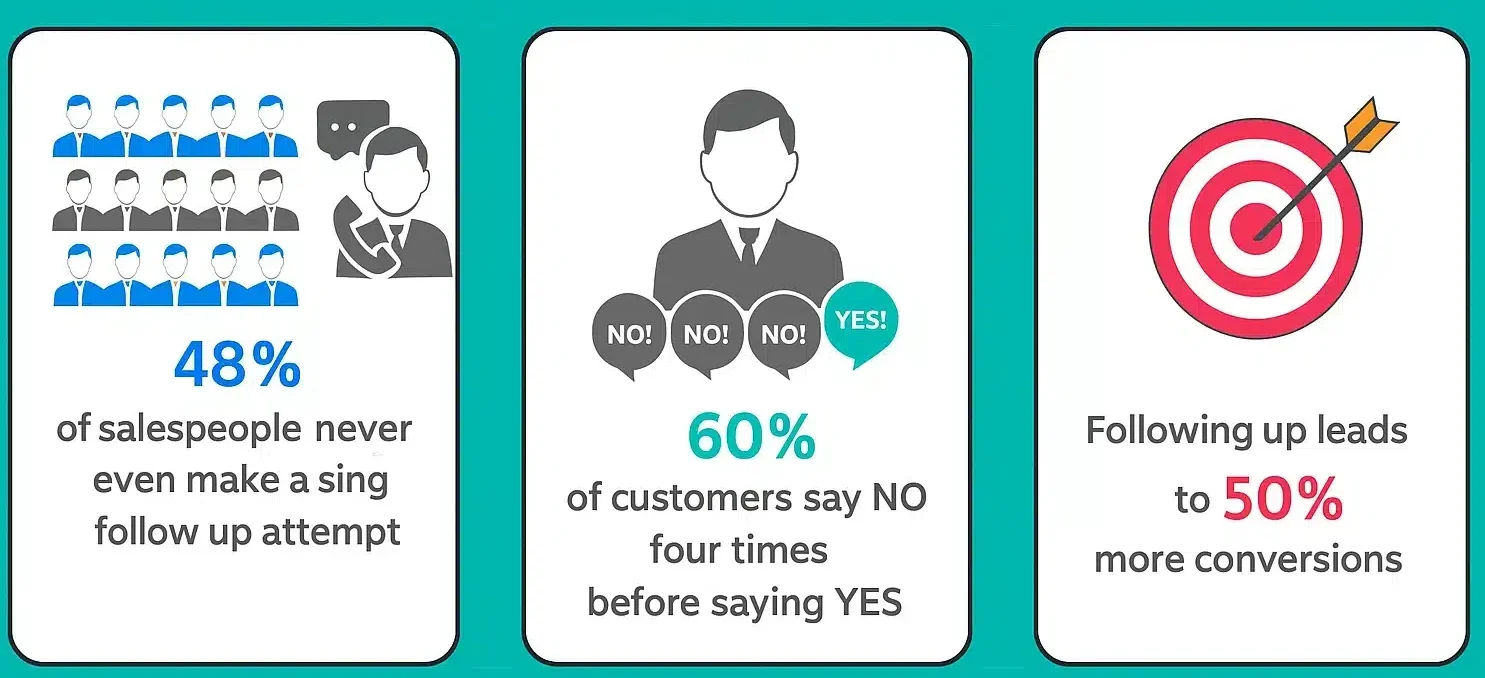
48% of Salespeople Never Follow Up
Nearly half of all salespeople give up after the first call. No follow-up. No second attempt.
This isn’t just a missed opportunity it’s a critical breakdown in the sales process. Especially when you consider how customers actually make decisions.
60% of Customers Say “No” Four Times Before Saying “Yes”
Research shows that the majority of prospects require multiple touches before converting.
If your reps stop after one interaction, they’re walking away from leads that could close with just a few more follow-ups.
The Sales Coaching Opportunity
This is where sales call recording becomes an essential tool for growth. With a call recording system in place, you can:
-
- Review sales conversations to identify missed follow-up opportunities
-
- Coach your team on how to handle objections and move deals forward
-
- Track lead engagement and follow-up consistency across your pipeline
The Benefits of Lead Follow-Up Automation for Sales Conversions
When used effectively, lead follow-up automation offers significant advantages that directly contribute to better sales conversions. Let’s take a closer look at these benefits:
-
- Timely and Consistent Follow-Ups
In sales, timing is everything. Research has shown that the quicker a lead is followed up, the more likely they are to convert. By automating follow-ups, you ensure that every lead receives a prompt response, keeping the momentum of the initial contact alive.
- Timely and Consistent Follow-Ups
Automated systems don’t just send follow-ups—they also ensure that messages are sent at the optimal time, based on the lead’s activity. For example, if a lead fills out a form or engages with your content, the system can trigger a response promptly, making sure the connection remains fresh in their minds.
-
- Focus on High-Engagement Leads
Not every lead has the same level of interest or potential to convert. Some leads may show strong interest by downloading product information or asking for a demo. Lead follow-up automation helps identify these high-engagement leads and prioritize them for follow-up.
- Focus on High-Engagement Leads
By focusing your efforts on the leads that are most engaged, you ensure that your team spends their time on those who are most likely to convert, increasing efficiency and overall conversion rates.
-
- Personalized Communication at Scale
Personalization is one of the most effective ways to engage potential customers, but it’s difficult to achieve at scale without automation. Lead follow-up automation allows you to send personalized communications based on each lead’s specific actions.
- Personalized Communication at Scale
For example, if a lead is interested in a particular service, they can automatically receive more details about that service, along with relevant case studies or testimonials. This personalization makes the lead feel valued and increases the chances of them moving forward in the buying process.
-
- Simplified Lead Management
Managing a large number of leads can quickly become overwhelming, especially when it’s done manually. A lack of organization can lead to missed follow-ups and confusion over lead status. Lead follow-up automation helps streamline the entire process by centralizing all lead interactions in one place.
- Simplified Lead Management
Automation also helps assign leads to the appropriate sales rep based on predefined criteria such as location or product interest. This ensures that every lead is handled by the most suitable person, resulting in a smoother sales process.
How to Implement Lead Follow-Up Automation
To successfully implement lead follow-up automation, businesses must plan carefully and ensure that their approach aligns with their sales goals. Here’s a simple guide to help you get started:
-
- Map Out Your Lead Journey
Before automating follow-ups, it’s important to understand the path your leads take from their first interaction with your business to conversion. Identify key touchpoints along the way, such as when a lead fills out a form, downloads a resource, or expresses interest in a product.
- Map Out Your Lead Journey
Mapping out this journey allows you to create automated workflows that guide leads through the process. You can ensure they receive the right messages at the right time, helping to keep them engaged.
-
- Set Up Automated Workflows
Once you understand your lead journey, the next step is to create automated workflows. These workflows should be designed to send specific communications or take action based on lead behaviors. For example, if a lead fills out a contact form, the system can trigger an action that moves them to the next stage of the funnel, such as providing additional resources or offering a demo.
- Set Up Automated Workflows
Automated workflows can also include reminders for your sales team, so they know exactly when to follow up with leads, reducing the chance of leads slipping through the cracks.
-
- Segment Your Leads
Not all leads are the same. Some may be ready to purchase immediately, while others are still gathering information. Segmenting your leads based on their behaviors and interests allows you to take a more targeted approach with your follow-ups.
- Segment Your Leads
By segmenting your leads, you can ensure that each communication is relevant, increasing the chances of conversion.
-
- Track and Optimize
After setting up your automated follow-up system, it’s essential to monitor its performance. Track key metrics like engagement rates, lead conversion rates, and the effectiveness of your workflows to see how well your automation is performing.
- Track and Optimize
Based on the data, make adjustments to your workflows, messaging, and lead segmentation to improve results. Regular optimization will help you continuously improve your follow-up process and maximize conversions.
Make Lead Follow-Up Automation Work for You
Lead follow-up automation is a powerful tool for businesses looking to increase their sales conversions. By automating the follow-up process, you ensure that every lead receives timely and relevant communication, making it easier to nurture them toward a purchase.
This approach not only saves your team valuable time but also helps streamline lead management, improve personalization, and focus on the leads most likely to convert. With the right strategy in place, lead follow-up automation can significantly improve your sales performance and make your team more efficient and effective.
Start using lead follow-up automation today, and you’ll soon see how it transforms your lead conversion rates.
For more insights on improving your sales process, visit Leadport.ai for automation tools that can help streamline your lead management. Additionally, check out this resource on lead management for more information on optimizing your sales funnel and increasing conversions.